Bringing a Water Sample to the Counter: What a Pool or Spa Test Tells You
A test strip gives you a hint. A real water test gives you a plan.
October 16, 2026 · 4 min read
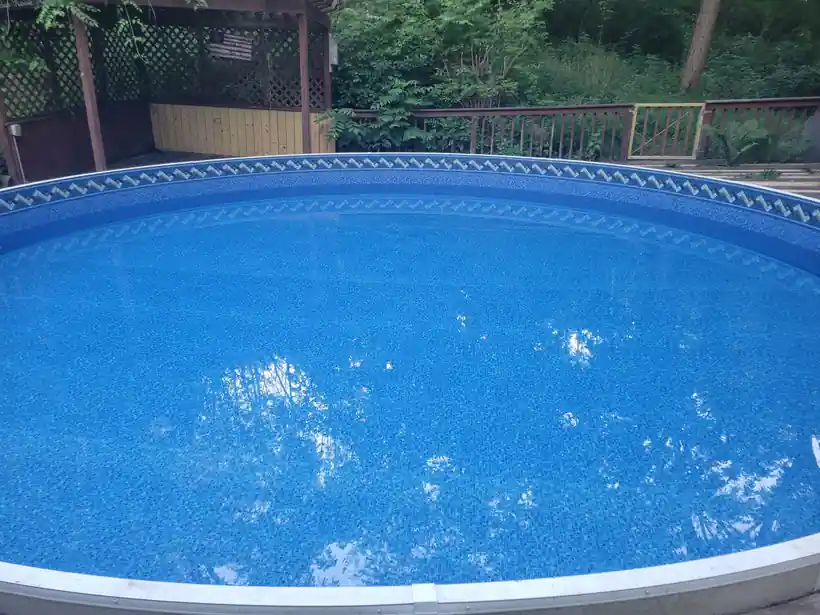
Pool and spa water can look perfect and still be off, and it can look cloudy and be one small fix away from clear. The only way to know is to test it. Test strips at home are a fine daily check, but a lot of owners get stuck the first time the numbers confuse them. That is what the sample counter is for. Here is what a proper water test tells you and how to get the most out of one.
Why a sample beats guessing
Pool chemistry is a set of connected readings. If one is off, it often pushes another off, and adding more of the wrong chemical makes the problem worse. A common example is a pool that is green and cloudy even though you keep adding chlorine. The trouble may not be the amount of chlorine at all. It can be that the water balance is keeping the chlorine from doing its job.
When you bring in a sample, we read several things at once and look at how they fit together. That is much faster than trial and error in your own yard, and it saves you from buying products you do not need.
What the test is looking at
A water test usually covers three broad areas. Each answers a different question.
- Sanitizer: is there enough chlorine or other sanitizer in the water to keep bacteria and algae in check, and is it the kind of chlorine that is still active?
- Balance: is the water chemically stable? This usually means pH, alkalinity and hardness, which control how the water behaves with your liner, your equipment and your sanitizer.
- Protection and cleanup: is there a stabilizer to keep sunlight from burning off the chlorine in an outdoor pool, and does the water need an algaecide or a specialty treatment?
Sanitizer does the actual killing. Balance decides whether the sanitizer works well, and whether the water is gentle or harsh on skin, eyes and equipment. Water that is out of balance can corrode metal parts, scale up on surfaces, or sting swimmers even when the chlorine reading looks right. Algaecide is a backup, not a fix for poor balance, which is why we look at the other readings first.
Hot tubs are a different animal
A spa holds a small amount of hot water that gets used heavily. Its chemistry can swing in a day or two in ways a big pool would take weeks to show. Hot water uses up sanitizer faster, bathers add oils and lotions, and the jets whip air through the water all the time. If your tub has a smell, foam, or a film on the walls, bring a sample. Those symptoms point in different directions, and a test usually sorts them out.
Many Sundance spas include an ultra-violet light for water purification, which is one piece of how the water stays clean. It does not replace sanitizer or testing.
How to take a good sample
Use a clean, rinsed container with a lid. A plastic water bottle works if it is clean and has no soap residue. Turn the bottle upside down, push it about elbow-deep into the water, and fill it there. Surface water is not representative because it holds sun-baked chemistry and floating debris. Stay away from the skimmer and the return jets, where the water has just been treated or is moving in odd patterns.
Bring it in soon after you take it. Water changes as it sits, especially in the heat, and a sample that has been in a hot car all afternoon will read differently than it did in the pool. Fill the container to the top so there is little air in it. If you know of anything unusual, such as a recent storm, a pool party, a new fill from a well, or chemicals you already added, tell us. That context often explains the readings.
What you leave with
A good test ends with a plan, not just a printout. We carry chlorine-based sanitizers, balancers, algaecides and specialty chemicals, and we give advice on which products to use and how much. Dosage is where most mistakes happen. More is not better, and adding everything at once can make a mess. Ask what to add first, how long to wait before the next step, and when it is safe to swim again. If you have kids who want back in the water, ask us how to time the treatment so you do not have to shut the pool down for long.
When to bring a sample in
Come in when the water looks different, smells different, feels different, or when your strips give a reading that does not match what you see. Come in at opening and before closing, when the pool is coming up for the season or being put away. Come in after a heavy rain or a big gathering. And come in any time you are tempted to dump in a second bottle of something because the first one did not work.
We are at 1001 12th Ave South in Onalaska, next to Sam's Club and Harley Davidson. Our hours are Monday to Friday from 9:00 am to 5:00 pm, and Saturday from 10:00 am to 4:00 pm. We are closed Sundays. You can also call us at (608) 783-4477 if you want to talk through a problem before you drive in. More about the products and testing is on the chemicals page at /pool-chemicals-health.
Quality Pool & Spa, (608) 783-4477
Call (608) 783-4477More articles
Above-Ground, In-Ground or Partial In-Ground: Choosing a Pool for a Coulee Region Yard
Start with what your yard does, then pick the pool that fits it.
Getting a Hot Tub Through a Wisconsin Winter
A hot tub in January is a pleasure. A frozen one in February is an expensive lesson.